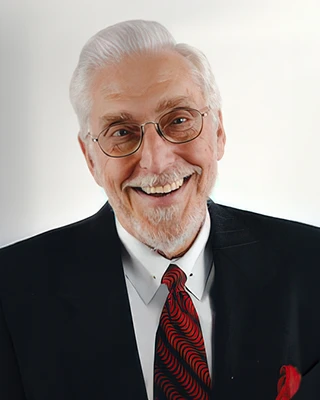
Herzog recalled vividly his parents’ experiences from having lived through the Crash of 1929 and the Great Depression. Thrift was an important lesson, as was saving and being thoughtful with money. His mother often said, “Money is round, and it will roll away.”
Herzog recognized that the average American did not understand how the capital markets worked. He endeavored to educate and raise awareness of financial literacy through his personal collection of documents pertaining to the economic founding of America.
At the time of the Museum’s opening exhibit on Lower Broadway in New York City, Herzog said:
“What was missing in the confusion and panic during 1987 was historical perspective. I wanted to contribute to people’s enhanced understanding of the capital markets through the history of our amazing American financial experience.”
The Museum remained on Lower Broadway for nearly two decades, where in 2001 it became an affiliate of the Smithsonian Institution. This enabled the Museum to borrow from the Smithsonian’s collection, which it has done extensively.
In 2008, the Museum moved to a beautiful landmarked building at 48 Wall Street, which allowed it to expand its reach and significantly enhance its visibility. The Museum produced 20 exhibits at that location between 2008 and 2018. It also developed the Museum Finance Academy (MFA) for high school juniors and seniors in 2009, which became the center of its financial education programs.
Also at 48 Wall, the Museum launched several popular event series which continue today. The Museum currently offers more than 30 public events per year, including lectures, panel discussions, conferences and walking tours. These programs are now offered in both in-person and virtual formats.
The Museum is now focused on moving into the 21st century with state-of-the art exhibits, as well as expanded educational initiatives and outreach programs. To that end, it will open a new facility at Commonwealth Pier in Boston in July 2026.
John Herzog’s legacy is a thriving institution where history meets the present, and all visitors can see and learn about the vibrant and important economic drivers of America.